Serena Williams, currently on hiatus from tennis, needs just two victories to break the all-time record for Grand Slam titles. How will she respond when she returns to the world stage? If there’s one thing we’ve learned, Serena just gets better with age.
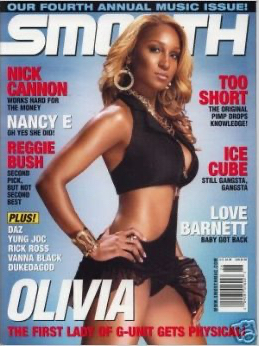
Smooth Magazine • View or download the full article (PDF).
by Justin Remus
This past January, Serena Williams won her sixth Australian Open. That wasn’t surprising. What was surprising was that Serena, now engaged to Reddit co-founder Alexis Ohanian, was eight weeks pregnant at the time. Having broken Steffi Graf’s record for most Grand Slam victories in the Open Era, she is only one shy of tying Margaret Court’s all-time record of 24 wins, most of which occurred when only amateurs were allowed to compete.
What will happen when she returns from her maternity leave? If history is any indicator, Serena has the mental and physical toughness to not only make a comeback but also to continue dominating her sport. Yes, she’s 35, but to say she’s playing her best tennis yet would be a huge understatement. Today, she’s ranked as the World Tennis Association’s number one women’s player while most of the opponents she faced at the beginning of her career are either retired or no longer top-ranked. Not only is she the greatest women’s tennis player ever, she may well be the most dominant American athlete alive today. When it comes to sheer physical talent and competitive willpower, Serena takes a backseat to no one. Mostly a baseline player, there are no weaknesses in Serena’s game.
Her crisp, powerful groundstrokes from either her forehand or backhand are delivered with an open stance using power and precision. It’s an aggressive style, not without its risks, but it’s compensated by her ability to make forceful shots at will with consistent accuracy. She puts opponents away quickly, and avoids getting drawn into long rallies. Serena may also have the best serve ever in the women’s game. Brilliant at disguising it in her delivery through her release, no other female player can match her combination of speed and shot placement.
“Serena proved that not only could a Black woman feature prominently in women’s tennis but own it. She overshadows all others when it comes to talent, television ratings, and impact on her sport.”
An athlete can be great, but greatness is not easily defined. It isn’t just about impressive win-loss records and amazing stats, although Serena surely has those, too. Ranked number one in the world seven different times, starting in 2002, she once held the top position for 186 consecutive weeks, tying Steffi Graf’s record, and is the oldest woman ever to hold that ranking. Serena has won the most major titles in singles, doubles, and mixed doubles combined of any current pro tennis player, regardless of gender.
But let’s break it down further. No tennis player, man or woman, has equaled Serena’s record of being a singles champion at least six times in three of her four Grand Slam tournaments. She captured all four Grand Slam titles consecutively in 2002 – 2003 and 2014 – 2015, which she dubbed the Serena Slam. She’s the most recent women’s tennis player to hold all four Grand Slams titles simultaneously and the only player to have won two of the majors (the Australian Open and Wimbledon) seven times each, as well as 10 Grand Slam tournaments in two separate decades. She also has one Olympic gold medal in singles play and three gold medals in doubles (shared with her sister Venus).
Her list of accomplishments is impressive but it still doesn’t truly honor her legacy. Serena proved that not only could a Black woman feature prominently in women’s tennis but own it. She overshadows all others when it comes to talent, television ratings, and impact on her sport. When the Williams sisters first began winning Grand Slams, the ratings were so high that CBS decided to move the U.S. Open finals to prime time, a space it has occupied ever since. Today there are noticeably more Black tennis players, which should mostly be attributed to the Williams sisters. They have shattered the widely accepted belief that tennis is a white-only sport, much like Tiger Woods did to golf. Not bad for a woman who got her start as a toddler, practicing with her sister on a tennis court riddled with potholes in Compton, California.
Serena is a fighter, not just on the court but also in her personal life. In 2003, she was forced to have knee surgery and a month later, her half-sister Yetunde Price was murdered in Los Angeles. Three years later, she seemed to be on her way out. Hampered by injuries and lacking motivation, she dropped to 139 in the world rankings. Serena, who is a Jehovah’s Witness, claimed her religious faith and a transformational expedition to West Africa reenergized her dedication to tennis. By 2009, she had won the Australian Open for the fourth time and Wimbledon for the third, as well as the doubles titles for the same tournaments. She was atop of the world rankings once again.
Her pride and competitive drive had been restored, but Serena soon got mired in controversy when she unleashed a profanity-laced tirade against a lineswoman at the 2010 U.S. Open. She was fined $92,500, an enormous penalty for any professional tennis player. The outburst complicated Serena’s love/hate relationship with the public. Tennis fans, mostly men, have frequently harped on Serena’s imposing but graceful musculature, insisting it’s too masculine. Snarky comments appear on Twitter about the size of her butt, her thighs, and comparing her toned arms to that of a football linebacker or boxer.
“She had proven herself so superior to her competition that winning wasn’t important anymore. This kind of defiant attitude might be admired in a man, but there is clearly a double standard about what is and isn’t appropriate for women in the spotlight.”
Similar sniping has been directed at her bold fashion choices as a player, along with her off-the-court fashion. Critics say she’s too flashy, self-absorbed, and not respectful to tennis decorum. After winning the 2012 Olympics gold medal, she danced for joy on the court, which some interpreted as a gang dance. When racism and sexism are thrown into the mix, even the most innocuous behavior is fair game for criticism.
The common thread of attack is that Serena is lacking in femininity, but also that she is not humble enough, even though she’s been the best in her sport for so long. For Serena, there has never been an arc of youthful boldness to polite maturity, a storyline that some demand. A few years ago, after coming up short in three Grand Slams, she told an interviewer she had learned how to diffuse the pressure she felt in competition by valuing her past accomplishments. “That’s the beauty of my career,” she said. “I don’t need to do anything at all. Everything I do from this day forward is a bonus.” Those were wise words, but in sports—where athletes are expected to credit their victories to hard work or divine intervention—they’re taboo. In essence, she was saying that she had proven herself so superior to her competition that winning wasn’t important anymore. She had nothing left to prove. This kind of defiant attitude might be admired in a man, but there is clearly a double standard about what is and isn’t appropriate for women in the spotlight.
In spite of all the haters, Serena has made the most of her celebrity. Endorsements have flowed her way from Gatorade, Delta Airlines, Aston Martin, Pepsi, Nike, and more. She has two fashion lines: Aneres (her name spelled backward) and Signature Statement. She has had small television roles on Law & Order: Special Victims Unit, The Bernie Mac Show, and ER. A good friend of Beyoncé, she did a cameo for the video of “Sorry” from Queen B’s “visual album,” Lemonade.
“We have not seen the last of arguably the most talented athlete of her generation. Serena’s detractors have been waiting a long time for her to fall off. They’ll have to wait a little longer.”
She’s also an ambitious philanthropist. Her Serena Williams Foundation has funded schools in Kenya, as well as university scholarships for lower-income students in the U.S. She launched the Yetunde Price Resource Center, named after her deceased half-sister, to aid families and individuals coping with community violence.
For two generations of tennis, Serena Williams has been a gift to America and the world. Winning her first major title at 17 and her most recent Grand Slam at this year’s Australian Open, her professional dominance covers a span of 18 years. Her longevity is unmatched by any athlete in any sport today, and she shows no signs of slowing down. She may be taking a break from her chosen sport, but we have not seen the last of arguably the most talented athlete of her generation. Her detractors have been waiting a long time for her to fall off. They’ll have to wait a little longer.
Copyright Star Media 2017.